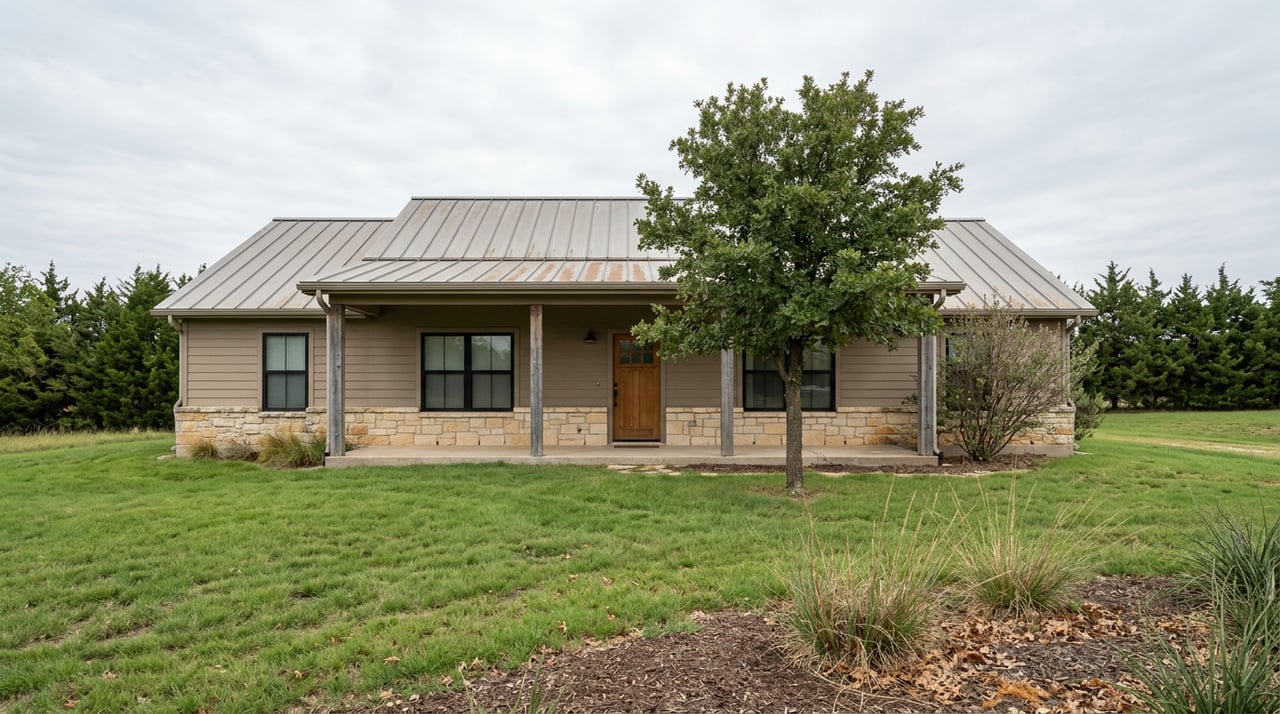
Two homes in Monument can list at the same price this month and still cost their new owners very different amounts every spring when the tax bill arrives. The gap has nothing to do with square footage, lot size, or how recently the kitchen was updated. It comes down to a line item most buyers skim past on the MLS sheet: which metropolitan district, if any, sits underneath the parcel, and how far along that district is in paying off the debt that built its roads, water lines, and parks in the first place.
Zillow's home value index for Monument, last updated at the end of June 2026, put the town's average home value at $771,131, essentially flat over the past year and moving to pending in about three and a half weeks. That single number flattens a town where a home near Jackson Creek Parkway and a home in an older pocket closer to downtown can carry district tax obligations that differ by thousands of dollars a year, even at an identical purchase price. The portal price tells you what you'll owe the bank. It doesn't tell you what you'll owe the district.
A District Forty Years Into Paying Itself Off
Triview Metropolitan District was formed in 1985 to build the infrastructure that didn't exist yet: roads, water and sewer lines, parks and trails along what's now Jackson Creek Parkway and the surrounding neighborhoods. Like most Colorado metro districts, Triview paid for that construction by issuing bonds, then repays the bonds through a debt service mill levy charged to every home and business inside its boundary.
The number that matters for a buyer comparing homes today is the direction that levy has moved. Triview's total mill levy stood at 35 mills in 2019. Over the following years the board temporarily and then permanently reduced it, first to 32, then 27, then 24, and it now sits at 20.5 mills for 2026, a reduction of more than 40 percent over six years. The district has committed to holding that rate through the term of a $12.6 million bond that Triview voters approved in May 2025 to fund the widening of Higby Road, a project currently on track for completion in November 2026.
That's the mechanism worth understanding: as more homes and businesses get built inside Triview's roughly 2,587 acres, the assessed value base the district can spread its debt across grows. The same dollar amount of debt service, divided across a larger and larger tax base, requires fewer mills each year. A home inside Triview today is paying into a levy that has been falling for most of the last decade and is now anchored by a promise not to rise again until the Higby Road bonds are retired.
The New District Next Door Started at Triple the Rate
Now compare that to Cloverleaf Metropolitan District, formed to fund infrastructure for a 144-home subdivision at the intersection of Higby Road and Jackson Creek Parkway, on land that had once been slated for a golf course. Development there broke ground in 2022, with roughly 48 homes built per year through 2025. To finance the $8 million in bonds needed for that buildout, the district set its mill levy at up to 65 mills per residence, more than three times Triview's current rate.
The reason isn't that Cloverleaf's developers priced things unfairly. It's arithmetic. Triview can absorb a $12.6 million bond without raising its levy because that debt gets divided across thousands of existing rooftops and decades of accumulated assessed value. Cloverleaf has to divide $8 million across 144 homes with no mature tax base behind them, so each home's share of the debt is far larger on a per-mill basis. A brand new, single-phase district almost always has to charge more per home than an established one, simply because there aren't enough rooftops yet to spread the cost.
| District | Formed / built out | Homes carrying the debt | Mill levy for debt | Trajectory |
|---|---|---|---|---|
| Triview Metropolitan District | 1985; more than 2,300 single-family homes today | Thousands of rooftops plus commercial parcels | 13.5 mills of a 20.5-mill total for 2026 | Down from 35 mills in 2019, held flat through the Higby Road bond term |
| Cloverleaf Metropolitan District | Broke ground 2022; built out through 2025 | 144 single-family homes | Up to 65 mills | Early in a 30-year repayment schedule |
Triview's own newsletter offers a useful way to translate mills into dollars: when the district's levy dropped from 35 to 27 mills, the owner of a $600,000 home saw roughly a $343.20 reduction in their annual property tax bill. That works out to about $43 per mill on a home valued at $600,000. Applying that same relationship to the roughly 44.5-mill gap between Cloverleaf's debt levy and Triview's current one suggests a difference in the range of $1,900 a year on a comparably valued home, purely from the district line item. That's not a precise number for any specific address, since actual assessed values and total levies vary by parcel, but it shows the scale of what's hiding behind a headline sale price.
The Disclosure Law That Only Covers Half the Story
Colorado law requires every purchase agreement involving a special district to carry a bold, all-caps disclosure warning the buyer that the property may sit inside one. That protection applies regardless of when the district was formed. But a newer rule, effective January 1, 2024, goes further: a seller inside a metropolitan district organized on or after January 1, 2000 must hand the buyer the district's official website directly, not a summary, not an MLS remark, the actual site where mill levies, board meetings, and finances are published.
Triview, formed in 1985, falls outside that stricter requirement. Cloverleaf, built out just a few years ago, falls squarely inside it. So a buyer touring a brand new subdivision is legally entitled to a direct link to the district's finances before closing. A buyer touring an established Triview-area home gets the standard bold-print warning but no equivalent website handoff, even though that home is still, today, paying into an active debt service levy. The paperwork treats the two situations differently. The actual dollar exposure often runs the opposite direction.
What to Ask Before You Compare Two Price Tags
Before treating two Monument homes as financially interchangeable because they're priced within a few thousand dollars of each other, it's worth asking a short list of questions that the sale price alone won't answer:
- What is the district's current total mill levy, and how much of that is debt service versus day-to-day operations?
- How large is the district's assessed value base, and roughly how many homes and businesses share the debt?
- Has the levy been trending down as the district grows, or is it early in a fixed repayment schedule with years of higher rates still ahead?
- Is there a separate homeowners association on top of the metro district, covering things like architectural review or amenities the district itself doesn't maintain?
- Can you get the district's official website directly, rather than relying on the tax figure printed in the listing, which often reflects a prior year's assessment on land that has since been built out?
Every Colorado metro district is required to publish annual transparency notices covering its current mill levy, board contact information, and meeting schedule, so this information is public. It just isn't always where a buyer thinks to look.
FAQ
Does every neighborhood in Monument sit inside a metropolitan district? No. District boundaries don't always line up neatly with subdivision names, and coverage varies block by block in some areas. The only reliable way to confirm status for a specific address is to check with the county or ask directly for the parcel's tax breakdown before writing an offer.
Does a metro district's mill levy always go down over time? Not necessarily. It depends on how much debt the district issued relative to how much assessed value has since been built around it. Triview's levy has fallen for years because the district matured and grew. A newer, smaller district can hold a high rate for a long time if its debt load is large relative to the number of homes repaying it.
Where can I find the current mill levy for a specific Monument address? The El Paso County Assessor's office and the Colorado Division of Property Taxation both publish mill levy data by taxing authority. Individual districts, including Triview, also maintain their own sites with current budgets, mill levy history, and board resolutions, which is the same website a seller is required to hand over under the 2024 disclosure rule for districts formed in 2000 or later.
A sale price is a starting point, not the full financial picture. In a town where identical price tags can sit on opposite sides of a very different tax obligation, that distinction is worth working through before you fall for a house. If you're comparing homes in Monument, Jackson Creek, or anywhere else in the Tri-Lakes area and want someone to run the real numbers with you before you write an offer, Susan Sedoryk would love to help. Let's Connect.