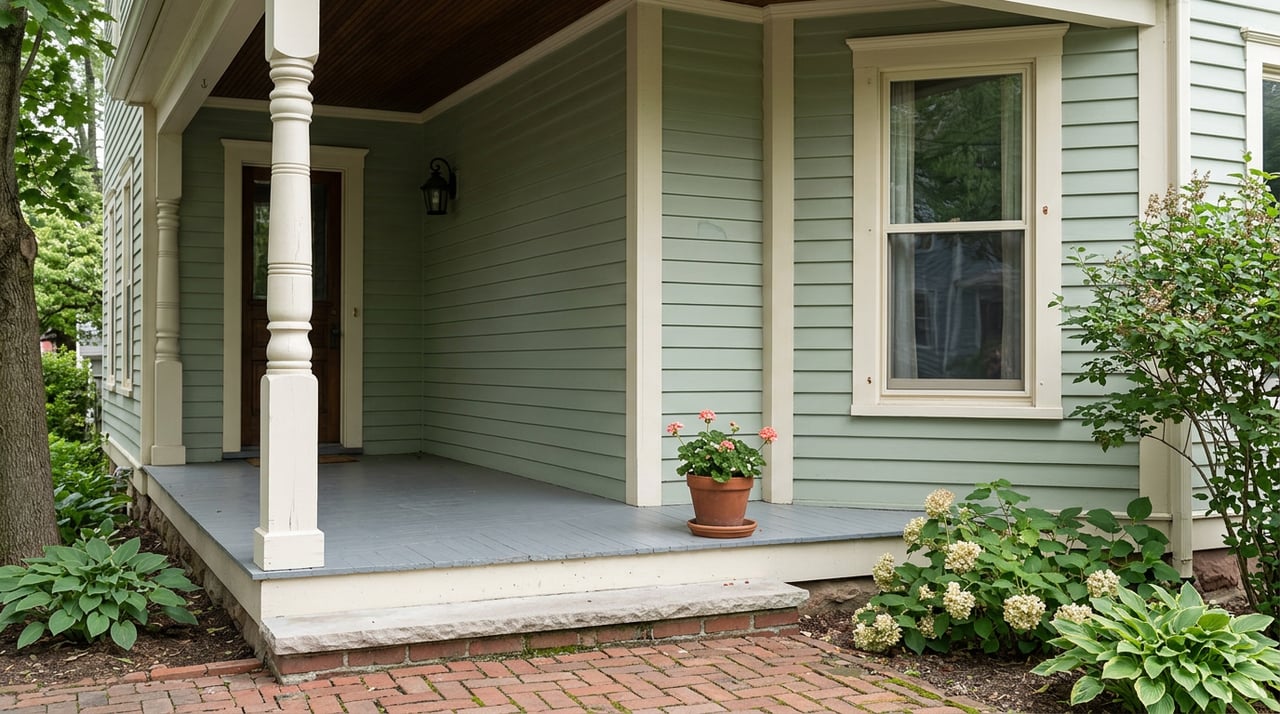
Homes in Old North End sell slower than the national market. Reporting from Homes.com pegs the neighborhood's average days on market at 66 versus 54 nationally as of spring 2026, with median trailing sale prices in the high $500s. Sellers usually blame the Historic Preservation Overlay Zone. That reading is wrong, or at least incomplete.
The overlay regulates what you can do to the outside of the house. It rarely kills a deal. What kills deals in ONEN is the pre-1940 systems behind the plaster, the way Colorado's disclosure form treats "historic district," and a state tax credit that most listing descriptions never mention. Get those three right and the DOM gap narrows.
What The Overlay Zone Actually Touches
The Historic Preservation Overlay Zone was established over the original North End district in 2000, and the district itself was expanded and renamed in September 2015 to what is now the Old North End National Register Historic District, Sub-areas 1, 2, and 3. If your property sits inside those sub-areas, exterior work visible from the public right of way that requires a Regional Building permit also needs prior approval from the City's Historic Preservation Board.
What is inside that fence, and what is outside it, matters more than most sellers realize:
- Triggers a Report of Acceptability: additions, new construction, demolition, replacement of siding or masonry, changing the size of a window or door opening, garage rebuilds visible from the street.
- Does not trigger review: interior renovations, repainting, minor repairs, and window replacement where the opening size stays the same. Reroofs are handled through a separate, streamlined re-roof permit path.
That distinction is the single most useful thing a seller in ONEN can internalize. Kitchens, primary baths, refinished floors, opened-up interior walls, new HVAC, added insulation, panel upgrades, plumbing rework, and staging paint are all yours to do without a Historic Preservation Board file. This is where pre-listing dollars produce the best return.
The Report Of Acceptability, In Sequence
If you do need exterior work before listing, or your buyer plans it after closing and asks for a contingency, this is the actual path:
- Confirm the property sits in the overlay using the city's SpringsView zoning map. Not every parcel inside the ONEN boundary is inside the Overlay Zone.
- File an Application for Report of Acceptability with the Land Use Review Office, with drawings and material specs.
- City planning staff reviews for conformance to the North End Historic District Design Standards, adopted by City Council and reaffirmed unanimously in a 2021 vote after a validity challenge.
- The Historic Preservation Board, a seven-member body appointed by City Council under City Code §7.5.205, issues or denies the Report.
- If issued, the Pikes Peak Regional Building Department will accept the permit application. If denied, the property owner can appeal to City Council.
The current planning contact for overlay work is Gaby Serrano, (719) 385-5089. For reroofs, the Development Review Enterprise office handles it at (719) 385-5982. Naming this in a listing packet, rather than gesturing at "historic district approvals," is the kind of thing a buyer's agent notices.
Where The Sale Actually Stalls
Most ONEN homes were built between 1885 and 1965, with the largest cluster going up between 1890 and 1910 during the Cripple Creek gold boom. That period puts a meaningful share of the stock squarely inside the knob-and-tube wiring era.
Here is the mechanism nobody spells out to first-time sellers of pre-war homes. Roughly 65 to 70 percent of insurers will not write a policy on a house with active K&T wiring, and FHA and VA loans almost always require its removal before closing. Conventional lenders will fund the loan, but the buyer still has to secure homeowners insurance to close, and if no carrier will issue it, the deal collapses. Industry reporting puts the DOM penalty on K&T homes at 30 to 50 percent longer than modern-wired comparables and rewiring costs between $8,000 and $15,000 or more depending on square footage and access.
Read that against ONEN's 66-day average versus 54 nationally. The gap is not the overlay. The gap is the buyer pool contracting the moment a home inspector notes ceramic knobs in the attic.
The seller move is to front-load it. A licensed Colorado electrician's inspection report, dated within 30 days of listing, gives you three usable outcomes. The system is confirmed abandoned in place, and you say so on the disclosure. The system is partial, and you have a rewire quote you can either execute, credit at closing, or price into the ask. The system is fully active, and you know before an inspection objection lands on day 12 of a contract.
The Disclosure Question Sellers Get Wrong
Colorado's Seller's Property Disclosure form asks about deed restrictions, affordable housing limits, and historic district location as a distinct category, separate from material defects. Under C.R.S. § 38-35.7 and the common-law duty affirmed in Colorado case law, a seller must disclose known material facts that could affect a buyer's decision, based on current actual knowledge.
Two things follow for an Old North End listing:
The historic district checkbox is not optional and not a negative. It is a factual condition of the parcel, and treating it as neutral in the disclosure narrative sets the tone for how the buyer's agent frames the rest of inspection. Sellers who hedge on that box invite questions on everything else.
Every home in ONEN built before 1978, which is nearly the entire district, triggers the federal Residential Lead-Based Paint Hazard Reduction Act. The buyer gets the EPA pamphlet, the Lead Warning Statement rides in the contract, and the buyer is entitled to a 10-day inspection window. Build that window into your closing timeline from the beginning rather than treating it as a surprise.
The reader of a Report of Acceptability, a K&T inspection, and a lead-paint acknowledgment is not a buyer looking for reasons to leave. It is a buyer who has already decided the home is worth the work and is looking for reasons to trust the seller.
The Tax Credit Lever Most Listings Miss
Properties inside the Old North End National Register district may qualify for Colorado state income tax credits for qualifying rehabilitation work, administered by History Colorado's Office of Archaeology and Historic Preservation. The technical contact at History Colorado for questions on residential eligibility is Joseph Saldibar, (303) 866-3741.
Two reasons this belongs in the marketing packet, not the closing folder.
First, it changes the math on the buyer's renovation budget. A buyer eyeing a $75,000 kitchen-and-bath project in a home that also needs qualifying exterior rehabilitation can recover a meaningful percentage of eligible expenses through the state credit. That is material to their decision, and it is a specific, verifiable fact a buyer's agent can price into an offer.
Second, it reframes the overlay zone from constraint to asset. The design review that felt like friction during your ownership is the same designation that opens the tax credit path for the next owner. Named correctly in the listing, it is a differentiator against the identical Foursquare two blocks outside the overlay.
FAQ
Does the Historic Preservation Board review paint colors? No. Repainting in existing colors and materials falls outside Report of Acceptability review.
Can I replace original wood windows before listing? Straight replacement in the existing opening generally does not require review. Enlarging or reducing the opening, changing sash configuration in a way visible from the right of way, or replacing with an incompatible material can trigger a Report. The North End Historic District Design Standards are the operative document.
If my buyer's FHA appraiser flags the wiring, can we still close? Sometimes, with a licensed electrician's certification and remediation completed before closing. More often the deal restructures as a conventional loan with a repair credit, or a cash offer at a price adjustment. Knowing the wiring status before you list keeps that conversation from happening during a live contract.
Are interior updates enough to lift the price without triggering the overlay? For most ONEN listings, yes. Kitchens, primary baths, mechanical systems, and refinished floors move price without touching the Historic Preservation Board file at all.
When The Details Are The Deal
The Old North End does not sell like the rest of Colorado Springs, and it should not be sold like the rest of Colorado Springs. The overlay is a fact of the parcel, the systems are a fact of the era, the tax credit is a fact of the district, and the disclosure form is a fact of Colorado law. A listing that names all four of those upfront closes faster than one that lets the buyer's inspector name them for you.
If you own in ONEN and are thinking about a 2026 sale, Susan Sedoryk will walk your property in advance, flag the items likely to surface in inspection, and build a pricing and disclosure strategy that treats the district's character as the asset it is. Let's connect.